
Choosing the right security camera and smartphone compatibility
Understanding camera-to-phone connectivity
South Africans increasingly want remote eyes on their property, and a poll shows 68% want to peek from their phones. The choice of a security camera hinges on more than looks; it hinges on how smoothly it plays with a pocketable device—how to connect security camera to phone should feel seamless.
Choosing the right camera is a ceremony of compatibility, not just a pretty lens. Focus on whether the app runs on the target OS and whether cloud or local storage suits privacy. Consider these factors:
- Phone OS compatibility: iOS and Android versions
- Connectivity: Wi‑Fi vs wired, cloud vs local
- Ease of setup: app interface, notifications
Smartphone compatibility stretches beyond brands; the app must handle notifications without draining battery, and the network must stay robust at odd hours. In the dance of camera-to-phone connectivity, frictions vanish when planning meets practicality. How to connect security camera to phone feels intuitive.
Compatible apps and operating systems versions
In rural South Africa, a steady link to home is priceless. A recent poll found 68% want to peek from their phones, rain or shine. That craving shapes choices from camera style to how to connect security camera to phone.
Choosing the right camera is a ceremony of compatibility, not mere looks. It hinges on app support for your phone’s OS and on cloud vs local storage for privacy. Here are core checks that keep the feed steady:
- Phone OS compatibility: iOS and Android versions you actually use
- Connectivity: Wi‑Fi stability and whether it works offline or on a local network
- Setup and notifications: simple app, clear alerts, gentle battery impact
Smartphone compatibility goes beyond brands; the app should handle notifications without draining battery, and the network should stay robust after dusk. When planning meets practicality, frictions vanish.
That steadiness becomes real when setup remains reliable.
Wi-Fi vs cellular requirements for mobile access
In rural South Africa, storms threaten signal as surely as shelter, and a steady link to home becomes priceless. A recent poll found 68% want to peek from their phones, rain or shine, shaping choices from camera style to how to connect security camera to phone.
Choosing the right camera is a ceremony of compatibility, not mere looks. It hinges on app support for your phone’s OS and on cloud vs local storage for privacy. Here, the story becomes practical: the feed should ride your home Wi‑Fi or a resilient cellular link when you roam. I see the feed as a lantern in the dusk, steady and discreet.
- Phone OS compatibility
- Wi‑Fi stability
- Notifications with minimal battery drain
When the network breathes, vigilance feels effortless—and the dream of constant sight is not fantasy but a reliable habit.
Security considerations when accessing footage on a phone
Across South Africa, 68% of households want to peek from their phones, rain or shine. Choosing the right security camera is a ceremony of compatibility—will it pair with your phone without constant toggling? It should feel like a steady lantern in the dusk, not a demanding gadget.
Here are the pillars that shape a dependable link:
- Phone OS compatibility and app stability
- Privacy choices: cloud vs local storage
- Battery impact and notification behavior
If you’re wondering how to connect security camera to phone, weigh where data lives and who can view it, and favor encryption and strict access controls. The right balance lets feeds be informative rather than intrusive.
Preparing your camera and network for mobile access
Check power, placement, and mounting
“Preparedness is the best security,” as the saying goes, and it rings true for your camera setup. A thoughtful approach to power, placement, and mounting makes mobile access a breeze rather than a scavenger hunt around a tangle of cords. In South Africa, where load shedding can test patience, plan for reliable power options and weather-resistant mounting, so the lens stays oriented and your footage remains accessible. When you consider how to connect security camera to phone, start with a stable, vibration-free mount and a powered adapter that suits indoor or outdoor use.
Keep these practical considerations in mind as you prepare.
- Power reliability for uninterrupted access
- Mounting stability to deter vibrations and tampering
- Router placement and signal visibility for a clear network path
With a calm, confident setup in place, the rest becomes less about gadgets and more about assurance.
Determine and configure network settings
In South Africa, a quick mobile check can decide whether your night is peaceful or interrupted. A recent statistic shows that 68% of homeowners review feeds on their phones within the first minute of an alert.
Preparing for mobile access means more than power and mounting. You want a stable network path and dependable power so footage remains accessible no matter the hour. From experience, I’ve learned that a calm, well-structured network makes all the difference.
- Maintain signal integrity by choosing a strong router position and minimizing dead zones
- Use consistent network credentials and a clear device name to simplify access
- Adopt privacy-conscious settings that still permit uninterrupted viewing on your phone
For those curious how to connect security camera to phone, the principle is balance, security, and a calm, readable network that travels with you.
Update firmware and mobile app versions
In a world where every alert is judged by latency, keeping devices updated is the unsung hero. If you’re wondering how to connect security camera to phone, start by ensuring firmware and the mobile app are current. Updates patch security gaps and smooth out compatibility quirks, so feeds stay crisp when needed.
- Check for firmware updates directly in the camera’s web interface or companion app and install the latest version.
- Update the mobile app to the newest build from the official store to ensure optimal performance on your phone.
- Enable automatic updates if available, so future firmware and app updates land without a second thought.
As newer firmware harmonises with your phone’s OS, the whole system breathes easier—less buffering, fewer login prompts, and steadier feeds day and night. With updated firmware and mobile app versions, your network path can stay calm and consistent, even as you roam SA’s city blocks.
Create a secure account and strong password
In SA, a secure account is the lantern you carry through the night; a well-chosen password is the first shield. If you’re wondering how to connect security camera to phone, start by creating a secure account and a strong password. Two-factor authentication adds a second key to the door.
- Use a unique username tied to the device or service
- Craft a 12+ character password with a mix of letters, numbers, and symbols
- Enable two-factor authentication and keep recovery codes handy
With a calm, fortified gateway, your mobile access breathes easy. Swap out default router credentials, enable WPA3 where possible, and position the camera for steady reception across SA’s cities.
Set up remote access and NAT/port-forwarding considerations
Across South Africa, a home sits quietly as dusk settles and a phone screen becomes the window to the night. ‘I sleep easier knowing I can peek from my phone,’ a rural homeowner often says. That calm comes from thoughtful setup that respects both family and data.
Preparing your camera and network for mobile access means weighing remote access and NAT/port-forwarding considerations. If you’re wondering how to connect security camera to phone, keep these high-level factors in mind:
- Assign a stable address to the camera, using a DHCP reservation or a fixed IP within the local network.
- Consider how much external exposure is necessary; where possible, rely on cloud-based traversal or a VPN instead of direct port-forwarding.
- Disable automatic discovery features like UPnP and prioritize encryption and access controls provided by the system.
These choices deliver a steady, respectful connection that travels with you through SA’s cities and countryside.
Step-by-step guide for connecting a security camera to your phone
Install the official app and create an account
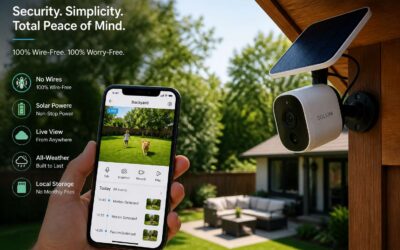
Smartphones have become the living room for security, turning home surveillance into something you can check from a couch in job-appropriate pants. In South Africa, more households trust their pockets to keep an eye on things than ever before. If you’re curious about the practical side, how to connect security camera to phone isn’t a riddle so much as a feature you enable with a tap.
Install the official app and create an account, and the bridge between camera and pocket is established. The app shows live feeds, stores clips, and sends alerts—no extra hoops to jump through. It’s user-friendly, snappier than a meerkat on the savannah, and keeps your footage accessible wherever you roam, with the occasional burst of South African sunshine.
Pair the camera with the app (QR code, Bluetooth, or wireless setup)
“Your phone is the new home guard,” a security expert quipped, and in South Africa that sentiment rings true as living rooms become control towers for everyday life. Smartphones cradle peace of mind, letting you monitor from the couch or the sunlit veranda.
If you’re wondering how to connect security camera to phone, begin here.
- Open the official app and initiate device pairing.
- Choose the pairing method (QR code, Bluetooth, or wireless).
- Follow on-screen prompts to complete the connection and start viewing live feeds.
Once linked, the bridge between camera and pocket becomes a quiet companion, turning vigilance into a graceful, accessible habit.
Verify connection on Wi-Fi and mobile data
A security expert quipped, “Your phone is the new home guard”—and in South Africa that rings true as living rooms become control towers for everyday life. If you’re wondering how to connect security camera to phone, this quick check-in gets you there.
Open the official app and initiate pairing, selecting QR code, Bluetooth, or wireless setup. Verify the connection first on home Wi‑Fi, then switch to mobile data to confirm you can view live feeds when you’re out of range. You’ll know it’s working when you see a steady stream.
Keep the stream steady by testing across networks after setup, and watch for buffering. If anything drops, revisit credentials and retry the linking process. If you’re unsure how to connect security camera to phone, this simple guide helps you stay connected anywhere in South Africa.
Test live view and alerts across devices
In South Africa, more than half of homeowners now monitor security feeds from a phone, turning pockets into silent sentries. That palm-sized vigilance reshapes response times and makes every doorstep feel a touch more secure—even when you’re miles away.
- Open the official app and start a fresh device session, letting the guided setup lead you through.
- Ensure the camera is powered and briefly connected to a known network before proceeding.
- Follow the on-screen prompts to establish a secure link, validating with a code or scan.
- Test the live view on Wi-Fi, then switch to mobile data to verify remote access.
- Activate motion alerts and test a push notification while moving around the property.
If you’re wondering how to connect security camera to phone, this quick guide helps you stay connected across SA networks. Test the stream across devices to catch buffering and ensure alerts arrive reliably, whether you’re in Cape Town or Polokwane.
Troubleshooting common connection issues
In South Africa, more than half of homeowners now monitor security feeds from a phone, turning pockets into sentries. If you’re wondering how to connect security camera to phone, the path is straightforward—and forgiving enough to rescue you from a late-night tech meltdown.
- Open the official app and start a new device session; let the setup wizard guide you.
- Power the camera and connect briefly to a known network to establish a baseline.
- Follow prompts to pair and secure the link, verifying with a code or scan.
- Test live view on Wi‑Fi, then on mobile data to confirm remote access.
Troubleshooting common connection issues:
- Cannot load the stream? Check the network band (2.4GHz preferred), reboot the router, and update firmware and the app.
- Alerts not arriving? Review notification permissions and ensure Do Not Disturb isn’t blocking them.
Managing multiple cameras from the same app
Across South Africa, more than half of homeowners monitor security feeds on a phone, turning loungers into command centers. If you’re wondering how to connect security camera to phone, the path is refreshingly simple and forgiving, even after a late-night tech meltdown. The trick is a clean onboarding through one app, a stable connection, and a few confirming prompts.
Within the app, you gain a nimble, multi-camera workflow that keeps every lens in view without juggling tabs.
- Centralized dashboard to manage multiple cameras
- Unified alerts across devices for quick response
- Role-based access for family or staff to view without chaos
Managing multiple feeds from one place isn’t just savvy—it’s survival, especially with data costs and spotty networks. A good app handles remote access gracefully, with clear status indicators and sensible power-saving when you need it.
Optimizing remote viewing, alerts, and privacy
Configuring notifications and push alerts
Electric dusk settles as you glance at your phone and the home stirs to life. “Speed is safety: the moment you know, you act,” a security expert says, and the idea sticks like a beacon. Optimizing remote viewing turns the camera into a vigilant scout you carry in your pocket. When you consider how to connect security camera to phone, you’re weaving a bridge between everyday life and watchful nights.
Notifications and push alerts should feel precise, not intrusive. A few high-level ideas to guide you:
- Choose alert types that matter and suppress noise
- Balance alerts with privacy by limiting devices and times
- Protect access with strong permissions and encryption
In SA homes, data plans vary, so thoughtful defaults help you stay informed without wasting bandwidth. The aim is crisp visibility across devices, with privacy and control kept intact.
Storage options: local vs cloud recording
In a world where a single notification can avert danger, optimizing remote viewing turns your phone into a vigilant scout. “Speed is safety,” a security expert reminds us, and that creed colors every glance at the live feed. When the image is crisp, you act with confidence.
- Local storage preserves footage on a home device or NAS, delivering quick access without data-wasting
- Cloud storage backs up clips off-site, guarding against device loss or damage
- Hybrid setups blend speed and resilience for a balanced approach
To keep alerts precise and privacy intact, tailor notices by device and time, and enforce encryption. For South African homes, thoughtful defaults conserve bandwidth while preserving clarity.
If you’re wondering how to connect security camera to phone, storage options—from local to cloud—help; pair this with strict access controls for seamless remote viewing.
Privacy and security best practices for mobile access
“Speed is safety,” a security expert reminds us, and on mobile that rule becomes action. A single alert reaching your phone can fend off danger in seconds, turning your device into a vigilant scout.
To protect privacy while staying responsive, enforce encryption, craft tight access controls, and tailor notices by device and time. For South African homes especially, defaults should conserve bandwidth without compromising clarity.
- In transit and at rest, encrypt data
- Limit access to trusted devices and accounts
- Use time-based alerts to reduce noise
If you’re exploring how to connect security camera to phone, these principles guide remote viewing while preserving privacy.
Sharing access across family or team members securely
From the palm-sized glow of your phone, a single alert can stand guard in seconds. When you wonder how to connect security camera to phone, think of remote viewing as a nocturne—clear, quick, elusive only to those who deserve access. Optimize by selecting a single, trusted app ecosystem across devices, trimming stream fidelity for steady motion, and balancing bandwidth with clarity, especially for South African homes where data is precious yet perception matters.
- Share access with role-based permissions so each member has only what they need.
- Offer time-based viewing windows to keep notifications purposeful.
- Revoke access promptly when devices are replaced or accounts change.
In the atmosphere of a modern SA home, privacy animates trust; the guardianship of footage becomes as much about who watches as what is watched.
0 Comments