
Understanding 24/7 Surveillance Needs
What continuous recording adds to security
Across rural towns and busy storefronts, a security camera that records 24/7 becomes a patient witness in the quiet hours. In South Africa, small retailers and homesteads report up to a 30% reduction in losses after embracing continuous recording.
Understanding surveillance needs means balancing wide coverage with practical storage and respectful privacy. This steady gaze acts as an electronic sentinel, deterring would-be trouble and providing clear, usable footage when incidents occur. It also enables remote monitoring, so a manager doesn’t have to be on site to check the feed, while the footage becomes a reliable thread for investigations and insurance claims.
- Deters theft and vandalism by remaining vigilant after hours
- Provides consistent evidence for insurance and police investigations
- Supports remote monitoring and rapid response from anywhere
Such vigilance suits sunlit roofs and long gravel drives, where the camera becomes a quiet partner in everyday resilience.
Common scenarios benefiting from round-the-clock footage
Across SA, after-hours incidents vanish into the dark—until a security camera that records 24/7 reveals them. Local retailers report up to a 30% drop in losses when continuous footage is in place. That unblinking gaze turns quiet hours into a courtroom of common sense, where every shadow tells a story.
- Rural storefronts and homesteads that stay vulnerable through the night
- Loading docks and back entrances with irregular deliveries
- Car parks and open yards where activity spikes at unpredictable hours
Understanding 24/7 surveillance needs means balancing broad coverage with practical storage and respectful privacy. The round-the-clock feed supports remote monitoring, fast incident response, and credible footage for investigations, making the camera a steadfast partner in everyday resilience.
Legal and privacy considerations for 24/7 recording
Night thickens like velvet, and in South Africa the value of a security camera that records 24/7 becomes a quiet verdict whispered in the dark. It turns wandering hours into a ledger of fact, where every shadow is a potential witness and even the stillness hints at what went wrong.
Understanding 24/7 surveillance needs means balancing vigilance with the rights of individuals. POPIA governs how footage is stored, who may view it, and how long records survive. Place clear signage, limit access, and avoid intrusive angles to keep privacy intact.
- Clear purpose and retention limits aligned with POPIA.
- Access controls, encryption, and audit trails for footage.
- Notice and signage to inform staff and customers of ongoing recording.
Taken together, these measures ensure the gaze remains protective, not punitive.
Choosing a 24/7 Recording Security Camera
Essential features for uninterrupted recording
Shadows don’t blink, but your records should. In South Africa, where power flickers and night lives in the margins, a security camera that records 24/7 becomes a steadfast witness that never sleeps.
Choosing the right device means prioritising continuity over flash. Seek reliable power options, generous storage, and a rugged enclosure—essentials that keep footage intact from dawn to the witching hour.
- Power reliability: UPS or battery backup to ride out outages
- Storage capacity: local plus cloud options for tamper-resistant archives
- Weatherproofing: IP66+ housing for dust and rain
- Video quality: 4K or at least 1080p with low-light performance
- Security: encryption at rest and in transit
Small brands promise tricks, but essence is endurance, maintainability, and discreet presence. In SA homes and businesses, a well-chosen model becomes a quiet sentinel—there when you need it, silent when you don’t.
Video quality, frame rate, and compression options
In a city where power dips and shadows linger, a security camera that records 24/7 stands as a tireless sentinel. The right choice isn’t drama; it’s endurance, with steady image quality and dependable data streams that survive the dawn and the witching hour.
Video quality matters as much as uptime. 4K gives razor-sharp detail, but 24/7 stores can turn into a brick of footage. A robust 1080p setup with strong low-light performance often hits the sweet spot. Frame rate affects motion clarity: 24–30fps feels natural; 60fps smooths rapid movement. Compression matters: H.265 reduces sizes; H.264 remains compatible.
- 4K at 30fps with H.265 for premium detail
- 1080p at 60fps with H.265 for smooth action
- 1080p at 24fps with H.264 for broad compatibility
In South Africa, where resilience meets privacy, the interplay of resolution, frame rate, and compression writes the truth across every frame.
Power options and reliability for 24/7 use
In a city where load shedding and creeping shadows keep night on edge, a security camera that records 24/7 becomes a quiet sentinel. Power resilience isn’t drama; it’s endurance, the difference between a silent dusk and a watchful dawn. A robust plan blends steady mains with fail-safes that kick in when the lights dim.
- Uninterruptible Power Supply (UPS) sized for the camera’s draw
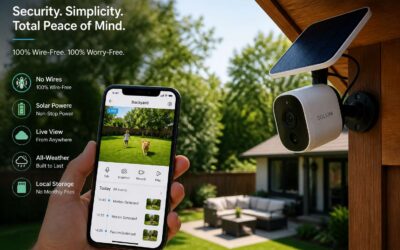
- Solar with battery storage for daytime autonomy
- Power over Ethernet (PoE) with built-in backup options
South Africa-specific conditions demand reliability, with heat, rain and outages testing gear. The right combination keeps 24/7 footage flowing to the cloud or local storage without interruption, even when the grid falters.
Storage options and retention policies
In a city where outages are the new normal, choosing storage for a security camera that records 24/7 is a governance decision, not a gadget choice. Footage lives beyond the moment—it becomes evidence, accountability, and memory. Local drives, cloud archives, or a smart hybrid keep data accessible without draining resources, especially when the grid falters!
- Local NAS or NVR with RAID and encrypted access controls
- Cloud storage with encryption and regional data residency
- Hybrid approach: recent clips on-site, older footage archived in the cloud
Retention policies should balance risk, cost, and privacy. In South Africa, POPIA governs data handling, so define durations that meet legitimate needs without over-retaining footage. Strong access controls and audit trails protect the security camera that records 24/7 data from misuse.
Remote access, alerts, and monitoring during continuous operation
Here in South Africa, where power flickers like a nightclub strobe, a security camera that records 24/7 is not merely hardware—it is a vigilant houseguest. Remote access, crisp alerts, and unblinking monitoring turn fleeting moments into reliable evidence and informed reactions, even when the grid winks out. In this climate, the camera becomes more than a gadget; it is governance in action, a quiet testament to accountability and memory.
Remote access should feel like opening a trusted door: secure authentication, view-based permissions, and resilient channels that survive outages. Consider these essentials:
- Secure, encrypted remote login with multi-factor authentication
- Real-time alerts via push, SMS, or email
- Contextual live monitoring and quick playback to verify events
Even during continuous operation, monitoring must be gentle on resources; the aim is steadiness, not drama. A calm, constant gaze earns trust, and in a landscape of outages, that trust is the real security.
Storage Solutions for 24/7 Footage
Local storage capacity, hard drive considerations, and RAID
Every frame costs space, and a busy site can clock 1–2 TB of footage each week from a security camera that records 24/7. That reality forces a careful balance between capacity, speed, and retention windows. Local storage solutions must scale, survive demanding South African conditions, and stay accessible for audits, investigations, or a quick replay during a tense incident!
I’ve seen storage become a living archive, where you weigh capacity against durability and access.
- Local storage capacity targets based on footage length and frame rate
- Hard drive considerations: surveillance-grade HDDs, larger caches, sustained write endurance
- RAID options: RAID 5/6 for redundancy; RAID 10 for speed and resilience
The right mix makes the difference between a perfect capture and a missed moment, and it echoes in every compliant audit.
Cloud storage options, costs, and reliability
Cloud storage for 24/7 footage offers scale without hauling more hardware into the guardhouse. Public cloud, private cloud, and hybrid setups blend hot, warm, and cold tiers, letting recent frames stay handy while aging older ones in a secure vault. In South Africa, regional data centers keep latency manageable and resilience high.
For a security camera that records 24/7, cloud storage becomes a living ledger—costs scale with retention, bandwidth, and device counts. Tiered plans and predictable egress help budgeting, while compression-aware ingest keeps the balance between fidelity and spend.
Reliability comes from multi-region replication, encryption, and transparent uptime guarantees. With SA-facing support and clear audit trails, cloud storage stands as a resilient fortress in continuous surveillance.
Retention policies, playback searchability, and compliance
Across South Africa, facilities with a security camera that records 24/7 have learned that data is a ledger you actually want to read. A thoughtful retention policy turns raw clips into a disciplined record—recent frames stay accessible, older ones migrate to secure archives, and the cycle supports both rapid investigations and long‑term compliance. It’s policy-as-security, elegantly boring.
Playback searchability hinges on clean metadata. Ingest-time tagging of time stamps, camera IDs, and location makes hour-long reels searchable in minutes, not mirages. Build a small, readable index and empower fast queries.
- Defined retention windows per site
- Automated archiving to warm and cold storage
- Tamper-evident logs and compliant deletion schedules
Compliance matters; align with POPIA, enforce strict access controls, and maintain audit trails. A well-governed archive earns trust from tenants and regulators, turning continuous surveillance into accountable transparency.
Integration and Security Best Practices
Integrating with existing security systems and access control
Across facilities from retail to campuses, a cohesive security setup that integrates cameras with access control turns footage into immediate action. A security camera that records 24/7 paired with door readers and alarms slashes response times and fortifies audit trails—it’s the backbone of a confident, proactive defense!
Key integration touchpoints keep this harmony smooth and secure.
- Interoperability standards (ONVIF, PSIA) with your VMS and access control systems
- Secure API access and role-based permissions for operators
- Real-time alert routing to guards or a security operations center with time stamps
- Tamper-evident logs and centralized audit trails
- Scalable license management and evergreen firmware updates
In practice, aligning these systems with a common security operations workflow makes footage, access events, and alarms flow into one coherent picture without overload, keeping sites in South Africa resilient when connectivity or power fluctuates.
User permissions, roles, and audit trails
A security camera that records 24/7 is only as trustworthy as the hands that command it. In South Africa’s vibrant campuses and bustling retail districts, crisp user permissions, clear roles, and auditable trails turn visibility into decisive action. When access is tightly scoped and monitored, operators see what they need—and nothing more—while sensitive controls stay shielded from careless hands.
- Define roles (viewer, operator, admin) with least privilege
- Enforce multi-factor authentication for privileged accounts
- Limit access to video streams and controls by role
- Maintain tamper-evident, time-stamped audit trails
- Schedule regular permission reviews and automated anomaly detection
Regular reviews and automated alerts stitch footage and events into a cohesive security narrative, keeping your 24/7 system resilient through outages and fluctuations.
Data encryption, privacy protections, and privacy-by-design
From Cape Town to Durban, a security camera that records 24/7 stands as a quiet lighthouse, tallying every moment—impactful, with incident triage speeding up to 40% in round-the-clock deployments.
Integration and security best practices hinge on data encryption, privacy protections, and privacy-by-design. When streams travel across networks, encryption in transit and at rest keeps intruders at bay; privacy-by-design trims data to the minimum, protecting identities while preserving operational clarity.
- End-to-end encryption for live streams and stored footage
- Robust key management with rotation and access controls
- Role-based access to video streams and controls
- Tamper-evident, time-stamped audit trails
In South Africa, this blend of encryption and privacy-by-design reads as a story of trust—an architecture that guards people and property without stifling the pulse of everyday business.
Firmware updates, vulnerability management, and device hardening
Across South Africa, a security camera that records 24/7 is more than a device—it is a quiet sentinel whose vigilance pays dividends in trust and clarity. When firmware stays current, vulnerabilities shrink, and a layered shield forms around networks, keeping crucial footage flowing through the night and strengthening guardrails against evolving threats.
Integration and security rest on a few sturdy gears.
- Regular, signed firmware updates to verify authenticity and thwart tampering
- Proactive vulnerability management with automated scans and timely patches
- Device hardening: disable unused services, enforce strong credentials, and apply least-privilege access
Together, these habits turn raw footage into a trustworthy narrative, from Cape Town’s coastal streets to Durban’s busy corridors, ensuring the camera’s resilience and reliability.
Environment-Specific Setup for 24/7 Recording
Home and small business setups
In South Africa, a security camera that records 24/7 isn’t just protection—it’s a visible deterrent that can reduce losses for small shops by up to 30%. Environment-specific setup matters for homes and small businesses alike. Outdoor gear must endure glare and dust, while indoor layouts demand reliable power and clear sightlines. Rugged housings, strong infrared, and stable mounting help the system keep up with round-the-clock recording, even as conditions shift. Thoughtful placement minimizes blind spots and protects cables from weather and tampering!
- Weatherproof housings
- Low-light and infrared performance
- Discreet, secure mounting
For South African homes and shops, power reliability is non-negotiable—it’s a reality that shapes gear choices, as load shedding tests the system’s persistence.
Placement often centers on entrances and corridors, producing footage that reveals activity while respecting private spaces.
Retail and office environments
In bustling South African retail spaces, the smallest blind spot can become a big liability. A security camera that records 24/7 acts as a tireless witness, catching footsteps at entrances and along busy corridors even when staff are busy with customers.
- Storefront glare and reflective surfaces
- Traffic patterns around cash wraps and aisles
- Privacy zones and staff-only areas
In office environments, clean sightlines from reception to loading bays matter most. The right placement balances coverage with privacy, while sturdy housings and stable mounts keep the system steady through long shifts and shifting lighting—so footage remains usable when it matters most.
Outdoor vs indoor considerations
In South Africa’s busiest precincts, a security camera that records 24/7 becomes more than a gadget—it is a constant witness, turning tense moments into reliable evidence. Outdoor setups must endure sun, rain, and dust while keeping footage continuous through outages and temperature swings.
- Weatherproof enclosures and protective seals for harsh climates
- Sun glare control and wide dynamic range for day and night clarity
- Tamper-resistant mounting and vandal-proof housings
- Redundant power options and resilient network links to prevent gaps
Inside, sightlines matter as much as coverage. Position cameras to monitor primary routes and entrances while preserving privacy and easing cable management. Indoor environments remain steady across lighting shifts, ensuring usable footage when it matters most.
Power reliability and backup options
In South Africa’s busiest precincts, a security camera that records 24/7 isn’t merely a gadget—it is a constant witness turning tense moments into credible evidence and helping resolve incidents faster. An uninterrupted stream of light and motion can make minutes matter less ambiguous, giving communities a sense of safety when it matters most.
Environment-specific setups demand resilience: sun, heat, load-shedding, and outages can fracture footage. Backup options keep the frame alive and networks steady, so uptime remains intact when power falters.
- Uninterruptible power supply (UPS) with surge protection
- Standby generator and fuel management
- Solar power with battery storage
Indoor or sheltered spaces follow the same philosophy—steady power and simple cabling yield usable footage across day and night, supporting a calm, continuous record of the city’s rhythms.
0 Comments