
CCTV versus Security Cameras: Core Differences
Definitions and Primary Use
Across South Africa’s farms, towns, and wind-swept verandas, cameras stand as quiet sentinels, watching over late-afternoon porches and the glow of indoors at dusk. A small camera can ease the mind of a grandmother keeping watch from the kitchen window. When people compare cctv camera vs security camera, they’re weighing two paths to protection: a locally stored, on-site system versus a networked setup that travels with you. Recent surveys show homes with cameras report up to 30% fewer intrusions.
- Definition and scope: CCTV camera typically refers to a closed-loop system recording on-site, with limited remote access.
- Connectivity and access: security camera usually implies IP-enabled devices with remote viewing and cloud options.
- Primary use: CCTV focuses on deterrence and local evidence; security cameras enable monitoring across distances and multiple sites.
Ultimately, the choice balances setting, budget, and the need for remote insight in rural life.
Storage and Recording Methods
In the quiet hour, the choice between cctv camera vs security camera feels less like hardware and more like guardianship. Footage can stay tucked on-site or travel with you across networks, shaping how you respond as dusk settles over rural South Africa.
Core difference lies in storage and recording methods. CCTV typically stores locally on DVRs or NVRs with limited remote access, while security cameras often rely on IP networks and cloud or hybrid options.
- Local DVR/NVR on-site storage
- Cloud or hybrid cloud-plus-local retention
- Redundant backups and tamper-resistant disks
That mix gives you choice between immediacy and scale, especially in areas with patchy connectivity. The right balance adapts to wind and weather.
Connectivity, Wiring, and Installation
In rural South Africa, connectivity is as fickle as a Cape wind—65% of sites report intermittent network access after sunset. That makes the debate about cctv camera vs security camera less about brands and more about how footage travels when the lights go down.
Core differences here revolve around Connectivity, Wiring, and Installation. CCTV setups typically rely on coax or Cat5 back to a local DVR/NVR, with on-site storage and limited remote access. Security cameras tend to be IP-based, using PoE or Wi‑Fi to feed cloud or hybrid storage, expanding reach but demanding network resilience.
- Wiring footprint: coaxial or analogue lines to a local recorder vs IP cabling with PoE or wireless power
- Installation realities: network coverage, power reliability, and tamper resistance
Choose not by glamour, but geography—the balance between immediacy and scale reveals itself when installation realities are weighed against the setting.
Image Quality, Durability, and System Reliability
Across rural landscapes, image quality is more than a feature—it can be a lifeline when lights fail and the night grows loud. For the comparison of cctv camera vs security camera, image fidelity, durability, and system reliability shape the decision!
In terms of image quality, CCTV tends to deliver steadier outputs at standard definitions but may lag when you push higher resolutions. Security cameras, built on IP, can offer ultra-sharp detail and wide dynamic range, yet they demand dependable bandwidth to avoid gaps.
- Low-light performance and glare handling
- Rugged housings for dust and tamper resistance
- Reliable firmware and remote monitoring uptime
Ultimately, the balance between immediacy and scale—how quickly footage arrives and how far it travels—defines the choice between cctv camera vs security camera, especially in South Africa’s vast rural expanse.
Key Features and Specifications to Compare
Image Sensor Technology
Key features in this arena hinge on the image sensor—the quiet artisan behind every frame. When weighing cctv camera vs security camera, sensor type and architecture set the tone: CCDs once delivered near noiseless color in steady conditions, but CMOS sensors now lead with speed, power efficiency, and smarter processing. Security cameras tend to push backside illumination and wider dynamic range, turning dawn into daylight and shadows into readable detail!
Consider these touchstones when comparing sensors:
- Sensor size and pixel pitch affect light gathering and edge sharpness
- Dynamic range and HDR handle contrast between bright and dark areas
- Shutter type: rolling versus global influences motion artifacts
- Low-light performance and infrared compatibility for night use
In practical terms, this synthesis yields clearer faces at dusk, steadier motion, and truer color—an outcome that matters as the city wakes and the nights close in.
Resolution and Frame Rate
In a city where every second counts, resolution and frame rate determine what lands on camera. In the cctv camera vs security camera debate, these specs are the compass—crisper detail and smoother motion beat guesswork in busy environments. I’ve seen 4K at 60fps render faces clearly as light shifts.
- Resolution: 2MP (1080p), 4MP (1440p), 8MP (4K)
- Frame rate: 30fps standard, 60fps for fast motion
- Compression: H.265/HEVC
- Dynamic range: up to 120 dB with WDR
For South Africa, the lighting spectrum—from dawn to dusk—makes this balance essential for reliable identification and monitoring.
Compression and Storage Efficiency
In a city where every second counts, compression and storage become the quiet guardians of clarity. For the cctv camera vs security camera debate, the real difference-maker is how efficiently footage is squeezed and kept—so faces stay identifiable as light shifts across SA’s urban tapestry.
Key features to compare include the move from unlimited data to intelligent bitrate. H.265/HEVC codecs cut bandwidth while preserving detail, and 4K at 60fps can land with calm precision if the storage plan breathes with it. Consider these when weighing options:
- On-site NVR versus cloud archives
- Retention windows and motion-triggered recording
- Redundancy through RAID and offsite backups
In the South African context, the balance between compression efficiency and practical storage capacity shapes uptime, cost, and long-term reliability. The right configuration keeps the essential moments legible, even when the lights dip and the city hums on.
Power Options and Energy Use
Power options can decide the outcome in the cctv camera vs security camera debate, especially in a city that treats load shedding like weather. In South Africa, reliable power and smart energy use aren’t luxuries—they’re lifelines during outages. The energy footprint matters for urban surveillance as it scales.
- Power over Ethernet (PoE) cameras simplify wiring and trim overall wattage by combining power and data on one cord.
- UPS-backed or battery-integrated units ride through outages so cameras don’t blink in the dark.
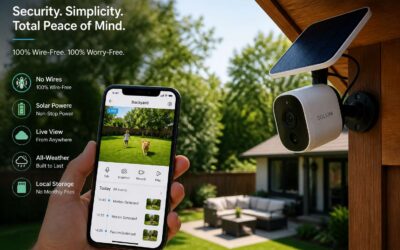
- Solar-powered options unlock remote sites without grid dependence, even in stormy seasons.
Key traits include low idle draw, smart power management, and wake-on-motion features that preserve essential footage without draining the battery. A thoughtful energy plan reduces running costs while keeping the system responsive when the city lights return.
Practical Applications and Use Cases
Residential vs Commercial Use
In South Africa’s vibrant towns and quiet suburbs, a well-placed camera wall can feel like a lighthouse in the night—confident, guiding, almost magical. “Visibility is the best deterrent,” a security consultant reminds us, and that truth travels from entrances to courtyards, inviting calm by day and vigilance by night.
Residential use centers on human traffic and precious margins of safety. When it comes to cctv camera vs security camera, homeowners weigh field of view, lighting, and how neatly cameras harmonize with home networks.
- Driveways and entryways
- Gates, walkways, and courtyards
- Garage and yard perimeters
- Pet and child safe zones
Commercial environments scale coverage for storefronts, parking areas, loading bays, and warehouses. In the ongoing cctv camera vs security camera dialogue, operators seek density, faster retrieval, and reliable power options to sustain round-the-clock vigilance.
Indoor vs Outdoor Deployment
“Visibility is the best deterrent,” a security consultant reminds us, and in South Africa that truth lands with tangible impact. When weighing cctv camera vs security camera for practical use, the decision hinges less on hype and more on deployment. Indoor spaces call for compact coverage around doors and lounges, while outdoor setups demand broad views that endure weather and lighting shifts. The result is a balance between deterrence and detail, where crisp footage can bring calm by day and vigilance by night.
- Indoor: entryways, corridors, reception
- Outdoor: gates, driveways, perimeters
- Hybrid: porches, loading bays
Accessibility and Remote Monitoring
Across South Africa’s varied landscapes, practical applications of surveillance hinge on accessibility and remote monitoring. When weighing cctv camera vs security camera, practical applications reveal the truth: reach, clarity, and control decide the day. A discreet doorway camera feeds entrances, lounges, and gates from a single interface, while live views let you watch from a smartphone as the sun slips behind the hills.
- Secure remote access via trusted apps on smartphones and tablets
- Cloud- or on-site storage with fast search and instant playback
- Real-time alerts with clear dashboards and tamper detection
Use cases span commercial lobbies, residential forecourts, and loading bays, with accessibility and remote monitoring turning footage into actionable insight. In South Africa, multilingual apps, encrypted connections, and resilient networks keep feeds reliable even when bandwidth is variable.
Privacy, Compliance, and Legal Considerations
Across South Africa’s diverse landscapes, trust in surveillance hinges on privacy as much as image quality, a lantern and a lens guiding through dusk. When weighing cctv camera vs security camera, reach, clarity, and control decide the day—whether guarding a discreet doorway, a busy lounge, or a loading bay, the right setup turns footage into decisive action.
- Signage and notice: clear disclosures about cameras and purpose of recording.
- Data minimization and access controls: only collect what’s necessary and restrict viewing to authorized personnel.
- Retention and secure disposal: defined retention periods with encryption and tamper-evident logs.
Such considerations shape practical deployments across commercial lobbies and residential estates, ensuring lawful use without eroding trust.
Typical Scenarios and ROI
Footage is only as useful as the action it informs. When you compare cctv camera vs security camera, ROI hinges on placement, monitoring, and disciplined access. A well-timed recording turns a near-miss into a verified incident and speeds investigations across SA workplaces from Sandton to Sea Point.
Practical applications span corporate lobbies, retail centers, and gated communities.
- Retail and hospitality: deterrence, quicker incident resolution, and calmer risk reviews.
- Industrial and logistics: safer loading bays, shorter claim cycles, and auditable workflows.
ROI comes from reduced losses, faster response times, and easier compliance reporting, turning surveillance from a cost into a measurable safeguard for South African estates and businesses.
Buying Guide and Decision Factors
Budget, Total Cost of Ownership, and Leasing
Budget season arrives with razor-edged questions: should we buy upfront, lease, or embrace a hybrid approach? In the South African business landscape, choosing between cctv camera vs security camera isn’t merely a technical preference—it’s a financial stance. A well-tuned system pays for itself by reducing losses and smoothing audits; a misjudged setup lingers longer than a power outage. The first step is clarity: what risk are you protecting against, and what will it cost over time?
Think in terms of Total Cost of Ownership, not a single invoice. Upfront hardware and installation sit beside maintenance, updates, and energy use, while leasing can turn CAPEX into OPEX and stabilise budgets.
- Upfront price and installation
- Ongoing maintenance and licenses
- End-of-life and upgrades
Leasing terms deserve scrutiny: length, renewal options, included services, and data privacy commitments. For some, leasing is a gentle modernisation; for others, ownership offers depreciation benefits and control.
Ecosystem and Integration with Other Security Tech
Security is not merely a shield but a living system that can inhale budgets and exhale risk. In South Africa, up to 30% of security upgrades fail to harmonize with existing infrastructure. The choice between cctv camera vs security camera is thus a decision about rhythm, compatibility, and long-range consequences rather than a mere lens swap.
Buying guide and decision factors hinge on ecosystem and integration with other security tech. Find devices that talk to your video management system, access control, and alarms, then weigh how they fit into the broader tapestry:
- Open standards and vendor interoperability
- VMS compatibility and analytics platforms
- Integration with access control, intrusion alarms, and door management
- Cloud vs. on-prem solutions, remote management, and data sovereignty
Look for scalable architecture, well-documented APIs, and transparent firmware updates that respect privacy under POPIA. A cohesive, interoperable setup reduces blind spots and keeps the night vigilant.
Vendor Support, Warranties, and Product Lifecycle
Operational uptime is the real currency of security. In South Africa, up to 30% of upgrades stumble when ecosystems aren’t aligned, costing more than the sticker price. When weighing cctv camera vs security camera, you’re buying into a support system as much as a device.
Vendor support, warranties, and product lifecycle determine long-run cost and risk. Seek local service coverage, predictable SLAs, and transparent parts availability. Ensure the warranty covers field service, firmware updates, and POPIA-compliant data handling.
- Local service centers and rapid response times
- Warranty terms covering parts, labor, and firmware updates
- Clear end-of-life plans and upgrade paths within the product lifecycle
That means the decision between cctv camera vs security camera hinges on these vendor support and lifecycle factors more than any spec sheet.
Common Pitfalls and Myths Debunked
In SA, up to 30% of upgrades stumble when ecosystems aren’t aligned. Buying smart means reading the map, not just the compass. When weighing cctv camera vs security camera, seek factors that endure beyond launch buzz: serviceability, upgrade paths, and how the device fits your site’s rhythms. In South Africa, the right choice becomes a durable partnership, not a one-off transaction—your security strategy should sing with steady uptime and predictable support.
Common pitfalls and myths debunked:
- Myth: Higher resolution isn’t a cure-all.
- Pitfall: Quantity over strategic placement.
- Myth: Cloud storage is always best.
- Pitfall: Ignoring integration with existing systems.
Let common-sense criteria guide you, not glossy marketing. A steady buying guide keeps you aligned with your needs, your team, and your future security posture, turning decisions into confident steps on a well-lit path.
Checklist for Selecting the Right System
Choosing between cctv camera vs security camera isn’t a thrill ride; it’s a quiet investment in uptime. In SA, misaligned ecosystems cause up to 30% of upgrades to stumble, so your first question should be: does this system play nicely with what you already have? A buying guide that goes beyond launch buzz keeps you on a well-lit path toward steady performance and predictable support.
To navigate, here’s a concise decision factors checklist:
- Deployment fit: indoor vs outdoor, mounting options, and environmental tolerance
- Privacy and compliance: data handling, access controls, and lawful monitoring
- Cost of ownership: upfront price, licensing, and ongoing maintenance
- Vendor support: local SA presence, response times, and service SLAs
With these guardrails, the decision becomes a durable partnership rather than a one-off sale, humming along with your site’s rhythms. In the end, the cctv camera vs security camera choice should feel like a stable backbone, not a whim.
0 Comments