
Understanding Wireless Camera Systems and Remote Viewing
Wireless vs. wired camera systems: what to choose
Across South Africa, remote monitoring has grown by roughly 28% in the past year, turning quiet homesteads into vigilant watchers from a distance. A wireless security camera system with remote viewing provides a steady eye over fields, gates, and verandahs, turning twilight rustle into reassurance and a tangible sense of safety.
Buddying up with the wireless option means choosing between the freedom of wireless cameras and the unyielding reliability of wired setups. For rural properties, this choice hinges on signal strength, power availability, and data costs, as well as the desire for easy relocation or expansion.
- Signal strength and network reliability in rural areas
- Installation flexibility and future expansion
- Ongoing power needs and data costs
Ultimately, the decision reflects local realities and priorities—security, privacy, and peace of mind—where remote viewing remains the connective thread that binds protection to everyday life.
How remote viewing works across devices
Across South Africa, remote viewing adoption has surged by 28% in the past year, turning fields and fences into vigilant silhouettes. This is possible with wireless security camera system with remote viewing, a technology that makes the unseen legible and the distant feel nearby, even when you are miles away.
Across devices, remote viewing travels through secure channels and weathered networks to your smartphone, tablet, or laptop, letting you observe in real time. The experience blends calculation with care, showing who is at the gate, when a door shifts, and how the land breathes after dusk.
- Smartphone or tablet
- Laptop or desktop computer
- Smart TV or connected display
Even the most practical tool becomes an invitation to reflection—how we guard what matters, and what trust demands of us as guardians of place.
Key components of a wireless security camera setup
Across South Africa’s suburbs and coastlines, a wireless security camera system with remote viewing becomes more than protection—it is a patient witness. The idea rests on balance: clear optics, resilient connectivity, and humane restraint. Cameras with weatherproof housings and night vision watch over gates and gardens, while a discreet wireless bridge ferries imagery to your network. Real-time alerts arrive with ritual precision.
Key components come into focus when you consider the setup and how each element serves the wider picture.
- Cameras with weatherproof housing, wide dynamic range, infrared night vision
- A wireless bridge or gateway that links cameras to your router and keeps data moving on secure channels
- Storage and viewing options—local NVR or cloud—and a companion app for remote viewing on phone, tablet, or laptop
Encryption and privacy are partners in protection, keeping the distant eye respectful and unobtrusive.
Bandwidth, network requirements, and bandwidth management
Understanding bandwidth for a wireless setup isn’t about flashy specs; it’s about keeping a watchful, respectful presence. A practical view of the wireless security camera system with remote viewing helps you map how much data moves from gates to screens and back, especially in South Africa’s mixed connectivity landscapes where evenings shift from fast to flaky.
- Per-stream bandwidth: about 2–4 Mbps for standard 1080p; HDR or multiple cameras push that higher.
- Upload speed matters; prioritize camera traffic with simple QoS rules to keep viewing smooth.
- Compression like H.265 can shave data without sacrificing clarity, easing data use on limited networks.
Network requirements become your quiet anchor: a reliable router, steady power, and devices tuned for remote viewing on phones, tablets, or laptops. In SA homes and coastal havens alike, planning for bandwidth today avoids surprises tomorrow.
Storage options: local vs. cloud storage
On the South African security frontier, the decisive moment after an alert is where the footage lands. The wireless security camera system with remote viewing shines when storage choices match your rhythm—local for instant access, cloud for off-site protection. I’ve learned not to chase glittering specs but to demand reliability, a setup that respects bandwidth quirks and real-world power habits.
- Local storage (NVR/DVR): fast playback, independent of internet outages, simple to manage on-site
- Cloud storage: off-site redundancy, easy multi-device access, requires steady uplink
- Hybrid options: the best of both worlds with on-site retention plus cloud backup
In SA homes and coastal havens, a balanced approach—local for immediacy, cloud for resilience—keeps remote viewing smooth on phones, tablets, and laptops.
Privacy, security, and safety considerations
A striking stat: 66% of home surveillance breaches trace to weak passwords rather than clever hacks. A wireless security camera system with remote viewing should be trusted, not treated as a magical talisman—but as a posture of discipline that respects privacy and security.
Privacy, security, and safety aren’t afterthoughts; they are design principles. Look for robust encryption, distinct user roles, and audit trails. Ensure firmware updates are timely and cameras don’t default to open access. Data minimization and local logging can calm nerves and bandwidth alike.
In South Africa, mindful deployment keeps remote viewing on phones and tablets respectful of privacy, safety, and neighborly courtesy.
Remote Viewing Features and User Experience
Real-time live view and mobile access across platforms
In a country where time is precious and screens never sleep, 72% of South African homeowners now monitor their properties in real time. That surge isn’t magic—it’s a network-friendly, user-friendly shift.
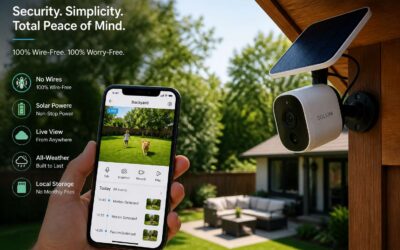
The wireless security camera system with remote viewing delivers real-time live view and mobile access across platforms, so whether you’re on Android, iOS, or a desktop, your feed is just a tap away. Low-latency streaming, end-to-end encryption, and intuitive controls make monitoring effortless.
- Real-time alerts and push notifications
- Cross-platform mobile apps (iOS, Android, web)
- Secure local and cloud streaming options
The experience feels seamless and reassuring—it’s almost like inviting a trusted companion into my home.
Mobile app compatibility and user interfaces
From Cape Town to Pretoria, an unseen vigil travels through the home—quick, quiet, and always ready. This wireless security camera system with remote viewing crafts an interface that feels both ancient map and high-precision instrument: feeds appear in crisp detail, with minimal taps and a calm, confident presence on every screen.
- Multimodal dashboards that fold feeds into an at-a-glance canvas
- Gesture-driven navigation plus robust PTZ controls for tight surveillance
- Built-in accessibility options and locale-aware prompts for SA households
The experience signals trust: responsive, secure, and seemingly alive, guiding you with subtle cues rather than noise.
Cloud vs local playback and recording options
“Peace of mind is the true perimeter,” says a Cape Town homeowner who leans into a wireless security camera system with remote viewing to keep an eye on the street between meetings. The experience fuses quiet vigilance with crisp, low-latency feeds that respond to a tap or two. Footage is discoverable on demand, across devices, with privacy-preserving prompts and locale-aware cues for SA households. In practice, this balance translates to a calm dashboard where history, alerts, and live streams feel purposeful rather than noisy.
- Cloud-based playback and automatic off-site backups for anytime access
- Local playback on a DVR/NVR or microSD for on-site resilience
- Hybrid options that cache footage at the edge while syncing highlights to the cloud
Each option shapes latency, privacy, and cost, letting South African homes tailor protection to their rhythms.
Alerts, automation, and snapshot functions
Across South African neighborhoods that never sleep, a wireless security camera system with remote viewing becomes a calm observer, turning streetlight reflections into a living story. Real-time feeds arrive with crisp clarity and surprisingly low latency, while alerts stay serene until something meaningful happens—motion after hours, doors left ajar—and then rise to the screen with purposeful gravity!
- One-tap snapshot capture for instant context
- Automatic highlights and clip exports for easy sharing
- Cross-device alerts with clear metadata
Automation weaves comfort into daily protection: schedules that mirror routines, geofencing that arms or disarms with a tap, and privacy prompts that respect household boundaries. Snapshots carry time-stamps, locations, and event notes, letting the viewer revisit moments later without wading through hours of footage. The experience stays navigable and efficient, a guardian that never rushes and never nags.
Two-way audio and intercom capabilities
“Seeing is protecting,” a seasoned security director likes to say. In South African neighborhoods that never sleep, a wireless security camera system with remote viewing becomes a calm observer—crystal feeds, real-time context, and a presence that deters trouble before it begins.
- Two-way audio for instant voice contact via the app
- Smart intercom that greets visitors and acts as a silent alarm
- Clear, low-latency audio with reduced echo
Intercom features elevate everyday living, letting you talk through the system from any device while privacy settings and encrypted connections keep conversations safe. A quick tap lets you verify deliveries, warn away strangers, or coordinate with household members—without missing a beat in your home’s narrative.
Multi-camera viewing and user permissions
Across South Africa’s neighborhoods that never truly sleep, a wireless security camera system with remote viewing becomes a silent, vigilant companion. Crystal feeds, real-time context, and a panoramic view of your property turn any screen into a calm observer. When activity arises, you’re empowered to respond from a single tap—whether you’re at work, on the road, or relaxing at home—without missing a beat in your story of safety.
- Multi-camera viewing with synchronized feeds for effortless oversight
- Granular user permissions to view, share, or export footage
- Role-based access with audit trails for accountability
- Low-latency playback with reliable cloud sync
The user experience is designed for clarity and privacy: intuitive layouts, encrypted connections, and device-aware alerts that adapt to your network. In the South African context, mobile-friendly interfaces mean you can verify deliveries or warn off strangers with confidence, wherever you are.
Installation, Setup, and Network Readiness
Planning camera placement for optimal coverage
A well-placed camera is a quiet shield. In South Africa’s urban rhythm, the wireless security camera system with remote viewing proves its worth when it sees what matters—and stops problems before they start.
Installation means selecting durable spots with clear lines of sight. Weatherproof housings, secure mounts, and tidy cable management (even wireless) keep the setup reliable under sun, rain, or a curious office cat.
Setup should respect the network: strong router placement, minimal interference, and encrypted sessions. Plan for steady bandwidth so remote viewing stays crisp, with sensible user permissions to prevent Sunday-night chaos.
For optimal coverage, treat placement like strategic chess. Consider height, angle, and access points; account for changing light throughout the day.
- Position near entryways and activity zones
- Avoid glare from reflective windows
- Choose sturdy mounts and weather-rated housings
Connecting cameras to Wi-Fi and ethernet options
Across South Africa’s urban rhythm, a proverb holds: Security is a watchful friend. Installation becomes a quiet shield, pairing weatherproof housings and secure mounts with tidy cabling. The wireless security camera system with remote viewing rises as a patient sentinel, ready to endure sun, rain, and bustle.
Setup must honor the network’s rhythm: strong router placement, gentle interference management, and encrypted sessions. Plan for steady bandwidth so remote viewing stays crisp, and configure sensible user permissions to prevent Sunday-night chaos. In cities where power can wobble, resilience becomes a design principle.
- Wireless: 2.4 GHz for range; 5 GHz for speed
- Ethernet: Cat6, optional PoE
- Security: TLS encryption and strong credentials
Network readiness means flexible connectivity. Whether Wi‑Fi or Ethernet, the system embraces both paths, offering dependable surveillance across diverse South African spaces—from urban lofts to secure sites.
Power options and battery life considerations
Streetlights flicker over the Mother City’s skyline, and security settles into the frame like a patient guardian. In South Africa, 68% say remote viewing lifts their sense of safety. Installation becomes a shield, pairing weatherproof housings and secure mounts with tidy cabling, while choosing discreet power sources keeps the view clean.
Setup must honor the network’s rhythm: position the router to minimize interference, enforce encrypted sessions, and assign sensible user permissions. That wireless security camera system with remote viewing thrives when access stays crisp across devices. That wireless security camera system with remote viewing scales across corners of your property with reliability.
Network readiness requires flexible connectivity and power planning.
- AC mains with a backup battery
- Power over Ethernet (PoE) via Cat6 cabling
- Rechargeable battery packs with optional solar charging
- UPS for edge devices to survive outages
With careful design, the system endures sun, rain, and bustle.
Camera pairing, system integration, and onboarding steps
Installation isn’t just about cable aesthetics—it’s a stable base for the wireless security camera system with remote viewing. In South Africa, tidy installation matters in urban spaces; weatherproof housings, discreet mounts, and tidy cabling frame security against weather and prying eyes.
Setup follows the network’s rhythm: position the router to minimize interference, enforce encrypted sessions, and assign sensible user permissions so access stays crisp across devices.
Network readiness means flexible connectivity and smart power planning.
- AC mains with a backup battery
- Power over Ethernet (PoE) via Cat6 cabling
- Rechargeable battery packs with optional solar charging
- UPS for edge devices to survive outages
Onboarding blends camera pairing, access provisioning, and privacy controls so new devices integrate smoothly.
- Define device naming and grouping
- Set role-based access for users
- Map storage choices to retention needs
- Verify consistent viewing on all platforms
Firmware updates and maintenance routines
A stable base isn’t just aesthetics; it’s the quiet engine of security. In South Africa’s urban spaces, a tidy installation with weatherproof housings and discreet mounts keeps cameras resilient against sun, rain. A wireless security camera system with remote viewing benefits from clean cabling that minimizes interference!
Setup follows the network’s rhythm: position the router to minimize interference, enforce encrypted sessions, and grant sensible user permissions so access stays crisp across devices.
- Position the router to minimize interference.
- Enable encrypted sessions with strong keys.
- Assign role-based access for users.
Network readiness means flexible connectivity and smart power planning—AC mains with a backup battery, PoE via Cat6, rechargeable packs with optional solar, and UPS for edge devices during outages.
In a wireless security camera system with remote viewing, onboarding and firmware maintenance begin here: schedule updates, run checks on cameras and storage, verify privacy controls, and confirm viewing across devices.
Common setup challenges and troubleshooting tips
In the dim glow of a South African dusk, installation becomes a quiet rite of security. A tidy mount and weatherproof housing keep the lens vigilant against sun and rain, while clean cabling makes the system sing with fewer shadows and less noise.
Setup must hum with the network’s rhythm: position the router to minimize interference, enforce encrypted sessions with strong keys, and assign sensible user permissions so the wireless security camera system with remote viewing stays crisp across devices.
Common setup challenges include:
- Interference from dense urban Wi‑Fi and municipal signals
- Power reliability and battery life for wireless nodes
- Delays in camera pairing or device discovery
- Drift in privacy controls and user permissions
Troubleshooting wisdom urges calm: observe firmware maturity, storage integrity, and cross‑device harmony, letting the night reveal where the signal falters.
Security, Privacy, and Data Protection
Encryption standards and secure data transmission
In South Africa’s growing smart-home landscape, every wirelessly transmitted frame has value—and protection isn’t an afterthought. “Encryption is the moat around your footage,” notes a leading security strategist, and that moat must be built into every link of the chain, from camera to cloud to app.
Guarding that data hinges on standard-compliant encryption and secure data transmission. Key pillars include:
- End-to-end encryption (E2EE) for video and metadata
- TLS 1.3 in transit to prevent interception
- AES-256 at rest to protect stored clips
- Secure key management and regular rotation
Privacy and data protection in South Africa are not afterthoughts; ensure devices support data minimization, authentication, and firmware updates. A wireless security camera system with remote viewing relies on strong privacy controls, transparent data handling, and adherence to POPIA to keep footage secure and compliant.
Authentication, access control, and user roles
In a landscape where every access point is a potential hinge, authentication is more than a password—it’s trust. For a wireless security camera system with remote viewing, controlling who sees what is as vital as the footage itself. Role-based access, admin vs. viewer, ensures staff only read what they need. Multi-factor authentication, device-based tokens, and periodic credential rotation harden the perimeter.
Privileged access is logged, time-bound, and regularly reviewed. Pairing devices to the user, enforcing strong session timeouts, and keeping firmware up to date protect both privacy and safety. Data minimization and clear data handling align with POPIA, ensuring that only metadata essential to monitoring is retained and accessible by authorized roles.
Managing passwords and device permissions
Trust is the quiet guard of the feed. In a wireless security camera system with remote viewing, passwords are not just keys—they’re trust tokens that protect every frame from prying eyes. “Security is a posture, not a product,” a seasoned analyst reminds us, and that stance shows up in how we design access: role-based, deliberate, and resilient to fatigue or distraction.
Beyond access, the focus shifts to who can pair devices to whom, how sessions terminate, and how logs tell a story of activity without exposing footage. When passwords are tied to robust device permissions, data minimization becomes a daily practice that aligns with POPIA expectations and respects the privacy of staff, visitors, and homeowners alike.
Physical security and anti-tamper considerations
Security isn’t a feature; it’s a posture. In the realm of wireless security camera system with remote viewing, a single breached feed wrecks trust faster than a coffee spill on a report. Think fortress, not gadget.
Privacy and data protection require data minimization, controlled access, and logs that narrate activity without exposing footage. POPIA guides these rhythms, especially for staff and visitors in South Africa.
- Tamper-evident housings
- Secure anti-tamper mounting
- Encrypted, tamper-detect logs
Physical security is the twin of digital safety: rugged enclosures, anti-tamper screws, and weatherproof housings. Regular inspections and tamper-detection alerts keep the narrative trustworthy, protecting both property and privacy.
Regular software updates and vulnerability management
Security is a posture, not a gadget. For a wireless security camera system with remote viewing, regular software updates are the frontline—patches close gaps before they become headlines. In SA’s climate, a neglected update is a door left ajar to intruders.
- Scheduled firmware patches and vulnerability management
- Automated security assessments and log integrity checks
- POPIA-aligned access control and data minimization
With these measures, integrity is a habit and privacy remains intact even when viewing feeds remotely. Regular maintenance and vigilant authentication ensure the narrative stays trustworthy, not a cautionary tale.
Incident response, logging, and compliance considerations
In South Africa, cybercrime costs businesses millions each year, turning a quiet breach into a headline-lurking nightmare. For a wireless security camera system with remote viewing, security is not a gadget—it is a living protocol that wakes at the first sign of trouble. Incident response, logging, and compliance form the backbone of trust.
An effective response begins with a clear playbook: defined roles, rapid containment, and a path to forensics. Logs must be tamper-evident, time-synced, and encrypted at rest, with retention governed by regulations. Privacy thrives when access is sealed behind strict authentication and data minimization guides what is collected and retained.
- Immutable logging and secure storage across locations
- Defined breach notification and escalation timelines
- Regulatory alignment and audit readiness for POPIA and related standards
These measures keep data movement transparent and accountability visible, ensuring that even remote feeds remain trustworthy. For the wireless security camera system with remote viewing, discipline and vigilance are the guardians of privacy and integrity.
Buying Guide and System Comparisons
Feature comparison across popular wireless systems
Night settles over the city like ink on copper wires. In urban South Africa, 73% of households say remote feeds bring swifter awareness, turning a camera into a guardian. The buying journey favors reliability, clarity, and quiet confidence over fancy gimmicks!
When evaluating a wireless security camera system with remote viewing, look for steadfast connectivity, strong night vision, and privacy guardrails. A concise buying guide follows:
- Resolution and frame rate suited to your area
- Power options and backup power
- App stability and cross-device access
Also weigh local vs cloud storage and firmware cadence.
Across popular wireless systems, you’ll find a spectrum of trade-offs. Some favor ultra-low latency; others deliver richer interfaces and cloud options. A brisk comparison highlights four pillars:
- Value for money
- Setup ease
- Security controls
- Expandability
The right choice reads like a guardian, not a burden!
Budget considerations: upfront cost vs ongoing fees
Budget is a feature, not a bolt-on. In evaluating a wireless security camera system with remote viewing, South African households balance upfront hardware costs against ongoing cloud and service fees. The aim? Reliability without sticker shock, clarity without scrambling the mortgage. Think of it as buying a guardian you can actually afford.
- Upfront hardware costs
- Recurring subscription or cloud fees
- Storage options (local vs cloud)
- Maintenance and firmware updates
Across systems, you’ll see a spectrum: some pack ultra-low fees with limited interfaces; others charge more upfront but deliver robust local storage, better privacy controls, and smoother app experiences. The short version is simple: upfront expenditure vs ongoing commitments shape convenience, security, and expandability for a growing household or small business.
Warranty, support, and service levels
South Africa’s security upgrades are increasingly guided by reliability, not bravado. Buyers seek predictability: a guard you can trust, year after year. A strong buying guide weighs warranty, support, and service levels as keenly as image quality or battery life.
Warranty terms should cover hardware, accessories, and power components for at least two to three years, with clear replacement promises. Support should flow through multiple channels and offer remote diagnostics and SLA-backed response times. When evaluating a wireless security camera system with remote viewing, look for transparent maintenance windows, documented firmware updates, and an upgrade path that fits a growing home or small business.
- Duration and what’s included (hardware, power, accessories)
- Support channels and service levels (phone, chat, in-app, SLA)
- Return, upgrade, and replacement policies
This trio—warranty, support, service levels—frames value beyond sticker price, guiding long-term peace of mind.
Smart home integration and ecosystem compatibility
Smart home buyers in South Africa are chasing peace of mind, and the latest chatter says 68% rank seamless remote viewing as non-negotiable. When I compare a wireless security camera system with remote viewing, the buying guide tilts toward ecosystem compatibility as much as image clarity. From experience, a system that speaks across platforms saves headaches later—it’s the difference between a setup you love and one you grudgingly tolerate.
Look for compatibility notes and a clear upgrade path within the vendor’s app. Consider the breadth of supported ecosystems and the ease of onboarding new devices. The following elements tend to separate the wheat from the chaff:
- Smart assistant compatibility (Alexa, Google Home, Siri)
- Home automation platform support (IFTTT, Matter)
- Cross-brand device interoperability and intuitive app UI
Ultimately, a system that behaves like a conductor—routing alerts, clips, and access across apps—offers long-term value in a South African home or small business!
Upgrade paths, scalability, and future-proofing
Peace of mind in a South African home grows when your security gear behaves like a living part of the household, not a stubborn gadget. In South Africa, 68% of buyers rank seamless remote viewing as non-negotiable, a clear sign that future-proofing matters as much as image clarity. When evaluating a wireless security camera system with remote viewing, the measure is not only what it does today but how gracefully it scales tomorrow—across devices, platforms, and growing households.
- Upgrade paths that let you swap in higher-resolution cameras without redoing the core hub.
- Cross-brand interoperability so you can mix brands without friction.
- Onboarding flow that adds new devices through a single app, without account headaches.
Scalability and future-proofing hinge on modular architecture, regular firmware updates, and support for Matter or IFTTT. A system that acts as a conductor—routing alerts, clips, and permissions—saves time and protects investment as priorities shift.
Reading reviews and selecting trusted sellers
In a country where the day ends with a South African dusk, 68% of buyers demand seamless remote viewing—the line between security and storytelling. A wireless security camera system with remote viewing becomes more than footage; it becomes a trusted partner in keeping a home linked to the moment, from kitchen windows to guardroom gates.
Buying guides and system comparisons hinge on how reviews read in real life. Reading reviews and selecting trusted sellers is essential to avoid glitter and glitz and to find steady performance.
- Independent customer reviews and experienced testimonials
- Transparent warranty terms and responsive local support
- Clear specifications for compatibility and return policies
When you compare options, favor sellers with transparent stocking, South Africa–focused guarantees, and a cadence of updates that echoes the pace of your life. A thoughtful buyer emerges from reading, an eye for detail, and faith in a brand that stands by its promises.
0 Comments