
Market Overview and Trends in Surveillance Cameras
Market Size and Growth Drivers
I watch the surveillance market in South Africa unfold like a living map—urgent, practical, and unpredictable. The momentum favors scalable, reliable systems for schools, clinics, and retailers. For security camera companies, that means a steady drumbeat of demand and a duty to balance protection with privacy, efficiency with ethics.
Three forces shape this shift:
- AI analytics reduce false alarms
- Edge processing lowers latency and bandwidth
- Seamless IT integration with existing systems
In SA, power reliability, privacy laws, and regulatory frameworks color decisions. I’ve learned that security camera companies must provide durable gear, robust local service, and compliant data handling to thrive here, turning risk that stares back into resilience you can trust.
Residential vs Commercial Segments
In South Africa, the surveillance market hums with two rhythms—quiet residential corridors and high-traffic commercial hubs. Commercial deployments now outpace residential upgrades by double digits, pushing security teams to balance seamless access with robust privacy and regulatory compliance.
Residential cameras favor privacy, simple installs, and local storage, while commercial systems demand scalable architectures, IP networking, and centralized management.
- Residential: privacy-first, wireless options, and easy setups
- Commercial: scalable architectures, IP networks, centralized management, and edge analytics
- Service and compliance: local support and clear data handling policies
For security camera companies, reliability, privacy, and IT alignment define success as SA schools, clinics, and retailers seek resilient ecosystems.
Regulatory and Privacy Considerations
South Africa’s surveillance market hums with a city-wide rhythm, where malls, campuses, and clinics install cameras at a brisk tempo. Growth in the double digits last year signals momentum, even as privacy concerns sharpen the lens of practice. Regulatory and privacy considerations now shape every deployment, turning data into responsible stewardship rather than a mere feed of images. For security camera companies, the measure of success lies in trust, transparency, and dependable performance.
- POPIA compliance and data minimization
- Transparent data handling policies and signage
- Rigorous access controls and audit trails
For security camera companies in SA, local support and clear data retention policies give a practical spine to this vision. Projects thrive when deployments align with IT ecosystems, network security, and privacy by design, ensuring resilient, scalable surveillance that respects citizens and operators alike.
Emerging Trends and AI-Driven Analytics
South Africa’s urban surveillance footprint grew in double digits last year, a pulse that reflects malls, campuses, and clinics embracing smarter guardianship. The aim is context, not mere coverage.
Emerging trends orbit AI-driven analytics and edge processing, letting cameras decide in real time while data stays local. Interoperable platforms, privacy-preserving models, and cloud hybridity are shaping resilient, scalable installations.
- AI-assisted threat detection and behavioral analytics
- Edge computing reduces latency and bandwidth use
- Interoperability with IT, access control, and incident management systems
For security camera companies in SA, reliability and transparency increasingly distinguish players—clear data handling, robust access controls, and local support becoming differentiators in bids.
Product Features and Technology to Evaluate
Image Quality and Video Metrics
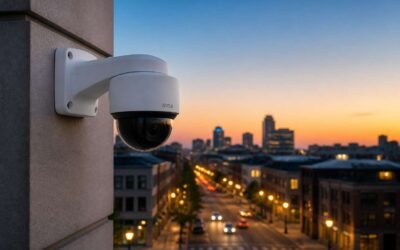
In the quiet hours, streetlights spill gold and shadows, and image quality becomes a trusted witness—that is the edge security camera companies chase!
Product features that drive clarity include sensor type (BSI-CMOS), 4K resolution, and adjustable 30/60fps frame rates. Look for wide dynamic range, advanced night vision, and color fidelity that survives mixed light. Lens quality, focal length, and rugged housing ensure dependable performance across South Africa’s urban and coastal settings. You’ll notice the difference in crowded city scenes.
- Image sensor performance and low-light capability
- Lens quality, field of view, and focus behavior
- Durability: IP ratings and vandal resistance
- Color accuracy and white-balance stability
On the technology side, evaluate video metrics: compression (H.265/HEVC), latency, bitrate control, and edge analytics. Consider storage options, scalable architectures, adaptive streaming, and how frame rate interacts with motion events to minimize churn.
Storage Options and Data Management
Storage is the quiet engine behind every watchful clip—and in South Africa, up to 72% of footage sits unused unless managed with care. In this realm, security camera companies merge crystal-clear video with disciplined data stewardship, balancing on-device resilience and cloud reach. Look for encryption at rest, role-based access, and immutable logs, while edge analytics trigger alerts only when meaning occurs, not for every grain of motion.
- On-prem storage with local NVRs for fast retrieval
- Cloud storage with data residency in South Africa
- Hybrid edge–cloud solutions balancing latency and bandwidth
- Retention policies, encryption, and tamper-evident auditing
When it comes to data management, seek architectures that scale, interoperate with existing CCTV ecosystems, and enable fast searches, audits, and clear data lineage.
Analytics and AI Capabilities
For security camera companies serving South Africa, the heart of product choice beats in analytics—edge intelligence that sees what matters, fast. A camera that learns on-device reduces both bandwidth and false alarms, turning every clip into a meaningful story rather than a sprinkle of motion.
Look for these capabilities to gauge AI maturity and resilience:
- Edge analytics and on-device inference for instant alerts
- Accurate person, vehicle, and object detection with low false positives
- Cross-camera linking and unified incident timelines
Beyond features, interoperability with existing CCTV ecosystems and open APIs matters, as does scalable model refreshes that keep pace with evolving threats. In rural and urban South Africa alike, practical design—clear dashboards, fast search, and tamper-evident logs—makes analytics truly meaningful.
Connectivity, Power, and Reliability
Product Features and Technology to Evaluate Connectivity, Power, and Reliability are the backbone of dependable security camera companies in South Africa. Connectivity means more than lanes; it means seamless failover between wired, wireless, and cellular networks, with edge processing to trim bandwidth and keep critical alerts local.
- Redundant power and network paths to survive outages
- On-device edge analytics that cut bandwidth and false alarms
- Weatherproof, tamper-resistant enclosures for harsh environments
- Remote diagnostics and secure firmware refreshes
Power choices must be versatile—PoE, battery backup, solar options for off-grid sites—so cameras stay online when mains falter. Reliability follows from robust weather sealing, proper IP ratings, and tamper-evident logs that reveal unauthorized access, 24/7 health metrics, and resilient cloud or local storage strategies.
Interoperability with OS and NVR Systems
Across South Africa’s security landscape, interoperability matters more than megapixels. Industry chatter suggests 65% of deployments stall at integration, a fate no installer wants. For security camera companies, success rests on cameras that speak the same language as OS and NVR ecosystems—open standards, standard codecs, and plug‑and‑play management that keeps the system humming!
- ONVIF compliance and open standards for cross-vendor interoperability
- RTSP streaming and accessible APIs for seamless NVR integration
- Secure OTA firmware updates and consistent authentication across platforms
Look for hardware and software that gracefully adapt to your chosen OS and NVR, not force a vendor lock. Support for scalable user roles, event-driven webhooks, and cloud-to-local storage options bridges local sites and distant branches. The aim is a holistic ecosystem where edge analytics, encrypted transmissions, and reliable diagnostics travel as one, from the coast to the Highveld.
Leading CCTV Providers and Brand Profiles
Global Leaders: Strengths and Focus Areas
Across South Africa’s security landscape, security camera companies must balance local privacy expectations with global innovations. A compelling statistic highlights that AI-enabled analytics can shorten incident response by up to 30%, underscoring why brand profiles matter. Global leaders—Axis Communications, Hikvision, Dahua, and Hanwha—carve distinct paths: uncompromising image quality, rugged reliability, and ecosystems designed for seamless NVR and cloud integration that regional businesses actually rely on.
- Image fidelity and low-light performance for challenging environments
- Open ecosystems and straightforward integration with local NVRs
- AI-powered analytics and edge processing for rapid insights
Beyond imaging prowess, these brands emphasize privacy-conscious features, resilient service networks, and scalable architectures that endure governance shifts and rising demand in South Africa.
Mid-Tier Providers: Value and Compatibility
A single high-definition feed can dramatically cut response times, and AI analytics are a big reason why. In South Africa, leading CCTV networks from global brands set the bar for image fidelity, reliability, and seamless NVR or cloud workflows. For security camera companies, the edge is not just hardware; it’s ecosystems that stay useful as governance and demand shift. Expect open APIs, unobtrusive privacy controls, and resilient service networks that survive regulatory changes.
Mid-tier providers balance value with compatibility. They align with local NVRs, offer scalable storage, and provide predictable maintenance windows for South African operations. Consider these traits:
- Cost-to-performance balance
- Interoperability with popular NVRs used locally
- Strong service networks and warranty coverage
Emerging Players and Startups
South Africa’s security camera market logged a 14% year-on-year rise in deployments, a statistic that nods to two truths: hardware alone won’t win the day, and ecosystems matter more than ever.
Leading CCTV providers illustrate this shift, combining rock-solid image pipelines with interoperable platforms that survive regulatory weather and budgetary gusts.
- Global Leaders: Axis, Hikvision, Dahua, and Bosch—names that promise consistent performance and broad integration options
- Emerging Players: nimble startups emphasizing privacy-by-design, edge AI, and modular, stack-friendly cameras
- Brand Profiles for South Africa’s security camera companies: regional partners, local service networks, and scalable warranty coverage that fit SA governance cycles
In this landscape, partnerships and local service networks are the quiet engines that keep deployments compliant and running smoothly.
Certifications, Security, and Privacy Practices
Footage is not a solo act; orchestration defines outcomes. In South Africa, leading CCTV providers fuse pristine image pipelines with interoperable platforms that weather regulatory gusts and budget cycles.
- ISO 9001 quality management for reliable builds
- ISO 27001 information security to guard data in transit and at rest
- POPIA compliance and privacy-by-design practices
- IEC 62443 or equivalent industrial cybersecurity standards for OT networks
Brand profiles for reputable security camera companies in SA showcase regional partners, trained service networks, and scalable warranty coverage aligned to governance cycles.
Certifications and privacy practices are not mere badges but practical assurances that deployments stay compliant and observable.
Buying Guide and Comparative Decisions
Pricing, Plans, and Total Cost of Ownership
Across South Africa, the total cost of ownership for security systems often runs about 40% above the sticker price once storage, maintenance, and upgrades are tallied. That’s the lived reality behind every line of a quote from security camera companies, where durability and future-ready features matter as much as the initial outlay.
Navigating pricing, plans, and total cost of ownership rewards a discerning eye. Look beyond the label: assess hardware longevity, service levels, and whether cloud or on-site storage best fits your footprint.
- Upfront hardware costs
- Ongoing cloud-storage or on-site storage fees
- Warranty, maintenance, and incident support
- Software licenses and firmware update cycles
- Integration with existing NVRs and OS platforms
We’ve learned that the right agreement feels like sunshine after rain: predictable costs, clear terms, and a partner who stands by you when cameras blink into the night.
Migration Paths: Upgrading from Older Systems
In the field, a single upgrade can cut downtime by nearly half—and that’s what makes security camera companies essential. Across South Africa, 58% of organizations migrating from older systems report faster incident response. Plan well, and you’ll glimpse a smoother night shift.
Buying guide for migrating from older systems sits at the crossroads of compatibility and future readiness. Consider firmware lifecycles, cloud vs on-site storage, and how the new kit talks to existing NVRs.
- Assess existing cameras, cables, and storage to identify compatibility
- Evaluate firmware upgrade paths and supported protocols
- Consider rollout timing to minimize disruption
- Clarify training and service SLAs with the provider
When you weigh offers from security camera companies, weigh the migration plan as heavily as the hardware spec—it’s the backbone that keeps rural businesses secure through night and season.
Deployment Scenarios: Home, Small Business, and Enterprise
“Security is not a product, but a promise kept when the lights go out,” a sage once said. In choosing security camera companies in South Africa, the buying guide becomes a compass for every doorstep, storefront, and server room, weighing tomorrow’s needs against today’s hardware. The trade-off between privacy, resilience, and scale is quietly choreographed.
Deployment Scenarios: Home, Small Business, Enterprise—each with its own cadence.
- Home: discreet hardware, privacy controls, easy cloud backup
- Small Business: hybrid storage, scalable licenses, simple remote management
- Enterprise: centralized analytics, high capacity, rigorous SLAs
Let the profile of your space whisper what the system will become.
Where to Buy and How to Vet Vendors
Security is not a product, but a promise kept when the lights go out. In South Africa, choosing security camera companies is a dance of privacy, resilience, and scale—your buying guide becomes a compass for doorstep, storefront, and server room, weighing tomorrow’s needs against today’s hardware.
Where to buy and how to vet vendors? Consider these non-negotiables:
- Local compliance and privacy practices aligned with SA standards
- Transparent data storage locations and retention policies
- Interoperability with your current OS/NVR ecosystem
- Clear SLAs, warranty terms, and upgrade paths
Let the profile of your space whisper what the system will become. The right vendor turns a budget line item into quiet confidence.
Warranty and Support Considerations
Choosing among security camera companies isn’t a roll of the dice; it’s a pact that outlives the hardware. Your warranty and support are the daylight to the night—assurances you lean on when firmware nags, cameras stall, or power flickers. In this Buying Guide, we measure guarantees, response clocks, and upgrade pathways so the initial investment becomes quiet confidence rather than a tentative shrug.
Comparative decisions hinge on service levels and clarity, not neon specs. Ask for tangible terms: response times, what is covered, how quickly replacements arrive, and how upgrades are managed as you scale.
- Clear SLAs and response time commitments
- Defined warranty scope for hardware and software
- Transparent upgrade and migration paths


0 Comments