
The Landscape of Surveillance in Japan
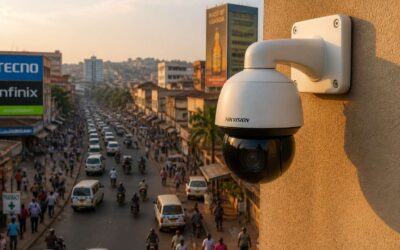
Picture this: you’re walking through Shinjuku Station during the evening rush hour. The sheer density of humanity is palpable, but so is the quiet hum of digital observation. Tokyo doesn’t feel like a panopticon in the dystopian sense, but rather a city that has normalized millions of eyes on its daily choreography. The culture here treats public monitoring less as an infringement and more as a civic utility, almost like street lighting or public Wi-Fi.
However, the actual infrastructure tells a more nuanced story compared to London or New York. The government installs cameras with explicit guidelines, yet the private sector handles the bulk of the volume, particularly in retail and convenience stores. This creates a patchwork of disconnected lenses. There is a persistent tension between the perceived need for safety and the legal silence on data retention. Most Japanese citizens pay it little mind. This cultural shrug is fascinating, as the proliferation of a security camera japan deployment is not uniform. It is dense in urban centers but surprisingly sparse in residential suburbs, which shifts the focus of crime prevention entirely onto local community watch schemes.
Consider the specific behavioral factors that drive this market:
1. The national obsession with meticulous loss prevention in high-turnover retail environments.
2. A declining population that has increased the need for automated monitoring in elder care facilities.
3. The specific logistics of managing crowd flow during major public events like the Olympics.
The technological evolution here is oddly conservative. While the rest of the world races toward facial recognition and AI-driven predictive analytics, Japan often sticks to high-resolution recording that simply provides evidence after the fact. It is a system built for documentation, not deterrence. In South Africa, we view surveillance as a tool for active intervention and response. Here, it feels more passive, a silent scribe recording the passage of daily life without immediate reaction. The result is a landscape where the hardware is ubiquitous, yet the aggressive integration we might expect simply does not exist. The streets remain orderly, but the motivation comes from social compliance, not from the fear of a camera’s gaze.
Navigating Japanese Privacy and Security Laws
Japan’s privacy laws are notoriously strict. My recent trip to Tokyo proved it. The Act on the Protection of Personal Information, or APPI, governs every lens. For any security camera japan installation, the rules are unforgiving. You cannot point a lens at a public street. That is a violation. Instead, focus on your own property while minimizing bystander capture.
Consider what the law demands:
- Notice requirements clearly inform people they are being recorded.
- Data retention limits restrict how long you keep footage.
- Consent protocols apply when cameras cover shared spaces.
Failure to comply invites hefty fines. Japanese courts often side with privacy over security. One wrong angle can cost you dearly.
Choosing the Right Camera for Japanese Conditions
I have watched a Tokyo office manager try to mount a standard retail camera onto a plasterboard wall that was never designed to hold anything heavier than a calendar. The result was comical, yet it highlights a serious point. Japanese architecture and climate demand a specific approach to surveillance, one that a typical South African setup might not consider. This is where the true value of a purpose built security camera japan model becomes apparent.
The core issue is often the hardware itself. Japanese summers bring oppressive humidity, while winters can deliver freezing temperatures. A camera with a standard IP rating might survive a Cape Town winter, but it will likely perish in Osaka’s typhoon season. You need to look for units with a robust enclosure and a heater built into the housing to prevent lens fogging. Furthermore, the mounting system matters. Vibration from frequent seismic activity, even minor tremors, can knock a poorly secured unit out of alignment over time.
Consider the specific technical requirements for the local environment:
– A wide dynamic range (WDR) to handle the stark contrast between bright exteriors and shadowed interiors common in Japanese buildings.
– Power over Ethernet (PoE) for simpler installation, avoiding the need for local power outlets that are often scarce in rental properties.
– High sensitivity sensors for low light performance, as many Japanese streets are not as brightly lit as those in major South African cities.
The software side is just as crucial as the physical build. You are not just buying a lens and a sensor; you are buying a language interface. Many domestic market units default to Japanese, and while the menus are logical, you do not want to rely on a translation app during a security incident. The better options offer a full English interface. Ultimately, the best choice aligns with the specific quirks of the location, not just the price tag. It is about showing respect for the environment you are installing within.
Installing and Maintaining Your System
Installing a system is an act of self-confrontation. You are admitting a truth about your environment, your vulnerability, and your own capacity for vigilance. In Japan, this process requires navigating dense infrastructure and a unique cultural sensitivity to privacy. The physical labor is significant. Lugging heavy components across a tiled roof, you feel the weight of your own commitment to safety. Mounting the hardware correctly is only the first step.
Negotiating cable pathways through tight wall cavities demands patience. A poorly placed lens is a silent witness to nothing.
Once operational, the work is ongoing. Weatherproofing seals degrade. Night vision sensors attract spider webs, cloaking the view in a blurry net. You must test the storage drive monthly.
- Wipe the lens housing with a microfiber cloth.
- Check the connection ports for corrosion.
- Verify the recording schedule aligns with sunset times.
Each maintenance ritual is a quiet conversation with the fear that prompted the purchase. You are not just solving a technical problem. You are maintaining a promise to yourself. The security camera japan market offers robust hardware, but the true security lies in your persistent attention. Nothing else matters.
Cost, Trends, and Making a Smart Purchase
Freight, customs, and VAT can shift the final price of security camera japan stock before a single lens is focused. For South African buyers, the invoice figure rarely captures landed cost.
Trends matter too. Compact Wi-Fi units and solar-ready models now appear in more catalogues, while older analogue kits lose shelf space. I see three shifts in local demand:
- Smaller footprints for tight urban plots
- Solar-assisted power for load-shedding coverage
- Remote viewing across multiple sites
A smart purchase rests on matching specification to site conditions rather than chasing the lowest quote. I have seen buyers overlook lens width, night range, and local support until installation week. That oversight turns a bargain into a costly return.
0 Comments