
Choosing a Wireless Home Surveillance Camera Setup
Understanding your surveillance needs
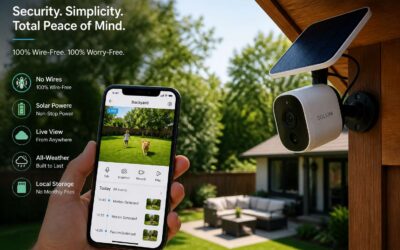
A wireless home security camera system can turn a quiet South African street into a watched street, delivering peace of mind when it matters most. Footage in crisp color, alerts that arrive on a phone, and dependable night vision—these are the hallmarks of a setup that feels protective rather than intrusive. As one homeowner puts it, security should be a steady companion, not a tangled afterthought.
Understanding surveillance needs starts with the lay of the land: which entry points deserve scrutiny, how your family moves through the space, and how much data can be streamed without clogging the network. A thoughtful setup balances field of view, weatherproofing, and data privacy.
- Field of view and blind spots
- Connectivity and power options
- Storage and privacy controls
Key features to compare
Auditors of taste know the trick: the best home security setup isn’t about dozens of cameras, but about features that actually reduce friction in daily life. In South Africa, homes with smart setups report alerts up to 50% faster after hours. In tech-aware spaces, crisp video, smart alerts that respect privacy, and a user-friendly app make the difference between watching and worrying. The right kit should feel natural, not ostentatious, and its choices should be as considerate as a well-mannered guest.
- Video quality and frame rate that stay legible in both daylight and dusk
- AI-driven motion detection and customizable alerts to curb false alarms
- Thoughtful app usability and ecosystem compatibility that keep controls intuitive
This balance makes the wireless home security camera system feel less like a surveillance gag and more like a dependable companion that respects your space and your Wi-Fi budget.
Budgeting and value considerations
South Africa’s savvy homeowners report that after-hours alerts come up to 50% faster when the budget aligns with sensible features. A well-chosen wireless home security camera system should feel like a quiet servant, not a loud extravagance—elegant, reliable, and easy on the Wi‑Fi budget.
When weighing value, I consider total cost of ownership over flash-in-the-pan specs. Here are the essentials:
- Upfront hardware cost versus ongoing subscriptions
- Warranty, support, and firmware updates
- Scalability for additional cameras and rooms
- Privacy controls and data storage options
In practice, the right balance respects space and sense, pairing quality video with a sensible ecosystem that stays unobtrusive in daily life.
Wireless vs Wired: Pros, Cons, and Use Cases
Reliability and connectivity factors
Security isn’t a luxury; it’s the quiet architecture of daily life, and in South Africa, a crisp wireless home security camera system has become a clarion call for peace of mind. The promise is simplicity—quick setup, flexible placement, and instant access from anywhere.
Wireless pros include installation speed and scalable coverage, perfect for apartments or homes with changing layouts. Drawbacks loom as battery turnover, occasional signal hiccups, and reliance on power and Wi‑Fi. For rental properties, in my experience, the freedom to relocate cameras without rewiring is priceless; for larger residences, network design and a solid hub become the invisible backbone.
- Pros: quick setup and easy repositioning
- Cons: battery life, potential interference, and dependence on a stable network
- Use cases: compact urban flats, duplexes, and retrofit projects in established suburbs
Reliability hinges on robust connectivity: stable internet, effective Wi‑Fi coverage, and encryption that guards footage. In mixed environments, a mesh network or a dedicated bridge reduces latency, while solar-powered or hard‑wired power backups can mitigate outages that threaten continuity.
Installation flexibility and scalability
In South Africa, 68% of homeowners report feeling safer after installing a wireless home security camera system for a sense of constant vigilance. That peace of mind comes from simple, scalable design that fits busy lives.
Wireless offers installation speed and the freedom to place cameras where they matter most.
- Quick setup without wiring
- Easy relocation as rooms or layouts change
- Scalable coverage for apartments and homes
But there are caveats: battery life, occasional signal interference, and a dependency on a steady power and Wi‑Fi.
For compact urban flats and rental spaces, the flexibility shines; in retrofit projects and duplexes, a strong hub keeps things quiet and reliable. For a wireless home security camera system, planning around power and coverage pays dividends.
Costs, maintenance, and long-term value
In South Africa, 68% of homeowners feel safer after adopting a wireless home security camera system, a testament to vigilance that fits busy lives. Wireless vs wired becomes a choice between freedom and steadfast reliability.
Here’s a quick read on the trade-offs:
- Pros: rapid setup and flexible placement.
- Cons: battery life and occasional signal interference.
- Use cases: urban flats, rentals, and retrofit projects.
Costs and maintenance: up-front savings from no wiring, balanced by ongoing batteries, storage, and power reliability. For a wireless home security camera system, long-term value hinges on battery life and data plans.
Ultimately, the choice hinges on space, power, and need for mobility.
Best scenarios for wireless setups
Shadows creep along the walls of a sunlit Cape Town flat, and 68% of SA homeowners report safer nights after embracing a wireless home security camera system. The lure is simple: no wires, cameras that glide to new angles as life moves around you.
Pros shine with rapid setup and flexible placement, letting you seal corners and doors you once avoided.
- Rapid setup
- Flexible placement
- Minimal disruption
Cons linger: battery life flags with use, and the occasional signal dip can dull a feed. Wired systems promise constant power, but demand planning and invasive wiring.
Best use cases for wireless setups include compact urban flats, short-term rentals, and retrofit-friendly spaces that must adapt to existing décor.
- Urban apartments
- Temporary rentals
- Retrofit-friendly spaces
Camera Features and Storage Options
Video quality, night vision, and field of view
In the quiet hours, a single crisp snapshot can alter the night’s story. A SA homeowner once said, “If I can see it, I can act,” and the truth lands with impact!
Video quality anchors a wireless home security camera system: 1080p or 4K with HDR, and field of view from 90° to 150°. That breadth ensures doors and yards stay under vigilant, cinematic watch.
Night vision adds a second, spectral eye—infrared LEDs reach far, while smart IR preserves faces in glow. Some models switch to color night vision when light lingers.
Storage options unfold like chapters of a story—drama saved locally or sent to the cloud, with safeguards.
- microSD cards on-camera for quick access
- encrypted cloud storage for off-site safety
- NAS/NVR for scalable retention
Whichever path you choose, robust encryption keeps footage from slipping into the shadows.
Storage choices: cloud vs local
As dusk settles, a wireless home security camera system becomes your quiet guardian, turning subtle motion into a tangible story. “If I can see it, I can act,” a SA homeowner once said, and that conviction lands with weight in the glow of an HDR stream and a calm, reliable connection. The camera’s broader field of view keeps doors and yards under a watchful, cinematic eye, ready to pivot with night and dawn alike.
Storage options unfold like chapters in a well-woven tale—drama saved locally or carried safely to the cloud, with safeguards that keep memory intact.
- microSD cards on-camera for quick access
- encrypted cloud storage for off-site safety
- NAS/NVR for scalable retention
Whichever path you choose, robust encryption keeps footage from slipping into the shadows.
Smart home integrations and alerts
Security isn’t a luxury—it’s a quiet promise that someone is watching. In a wireless home security camera system, motion blooms into a vivid, HDR-led story with a dependable, low-latency connection. Its broad field of view keeps doors and yards under cinematic scrutiny, night and dawn in harmonious balance.
Camera features and storage options fuse through smart home integrations and alerts.
- On-device microSD for quick access
- Encrypted cloud storage for off-site safety
- NAS/NVR for scalable retention
Robust encryption keeps footage safe, while integrations with voice assistants and automation routines translate streams into proactive measures. For South African homes, this orchestration adds ease—alerts can drive a door-lock sequence or lighting scenes, all from a single app.
Privacy controls and user management
Camera features in a wireless home security camera system fuse cinematic clarity with nimble connectivity. HDR highlights and a broad field of view keep yards and entryways in steady, legible focus, even at dawn or dusk. On-device microSD offers quick access, while encrypted cloud storage and NAS/NVR options scale with your needs—keeping footage safe and retrievable.
Privacy controls and user management are the quiet backbone. Roles are assigned, two-factor authentication is enabled, and access is guided by audit trails. Privacy masking zones protect sensitive areas, and configurable alerts ensure responses stay respectful of privacy!
- On-device microSD for quick access
- Encrypted cloud storage for off-site safety
- NAS/NVR for scalable retention
Together, these elements form a resilient spine for a wireless home security camera system that suits South African homes, balancing protection with practical convenience.
Power considerations and battery life
Load shedding is a daily reality in South Africa, and a wireless home security camera system must stay alert through outages. A modern setup blends cinematic clarity with practical reliability, offering HDR highlights, a broad field of view, and dependable motion cues from dawn to dusk.
Camera features and storage options work in concert. On-device microSD provides quick access to clips, encrypted cloud storage guards data off-site, and NAS/NVR configurations scale retention as your needs grow.
- On-device microSD for quick access
- Encrypted cloud storage for off-site safety
- NAS/NVR for scalable retention
Power considerations shape uptime as much as image quality. Many cameras offer mains power, battery, or solar-ready designs. Battery life varies with activity; expect weeks to months between charges under typical use, with energy-saving modes extending the interval further.
Setup, Security, and Ongoing Maintenance
Network setup and router considerations
Across South Africa, smart-home security adoption is rising, with homeowners noting a 30% faster incident response when a wireless home security camera system is properly configured. Setup starts with a sturdy network backbone: central router placement, minimal interference, and a quiet 2.4 GHz lane dedicated to cameras. For larger homes, a mesh or range extender keeps every unit connected.
- Position the router centrally and away from thick walls
- Use a strong, unique network name and robust Wi‑Fi password
- Consider a dedicated band or mesh system for camera reliability
Security is a architecture of trust: use strong, unique credentials; disable UPnP; enable encryption (WPA3); enable device-level authentication; monitor access; consider VPN for remote viewing.
Ongoing maintenance and router considerations keep the watchful eye nimble: schedule firmware updates, monitor firmware on cameras and the router, and manage channels to avoid interference.
- Regular firmware updates for all cameras and the router
- Enable Quality of Service (QoS) to prioritize camera traffic
- Review access logs and change passwords periodically
Firmware updates and security best practices
In South Africa’s evolving smart homes, a solid network backbone powers a wireless home security camera system. A quiet, interference-free environment keeps feeds stable and latency low, translating into quicker incident response. For larger houses, a mesh setup keeps every corner covered. I’ve seen how a calm network changes everything!
Security is a architecture of trust: use strong, unique credentials; disable UPnP; enable encryption (WPA3); ensure device-level authentication; monitor access; consider VPN for remote viewing.
Ongoing maintenance keeps the watchful eye nimble: regular firmware updates for cameras and the router; ongoing review of access logs; periodic password rotation; and thoughtful channel management to minimize interference.
Maintenance routines and warranty coverage
Across South Africa’s backyards, a wireless home security camera system becomes the guardian at night. Setup starts with a strong network backbone and thoughtful placement—cameras at doors and paths, reliable power, and a calm, interference-free channel. A quick test confirms stable feeds and ready alerts.
Security is the architecture of trust: disable UPnP, enable WPA3, ensure device-level authentication, monitor access, and consider a VPN for remote viewing. These steps keep the system resilient as you move between town and rural homestead.
Ongoing maintenance keeps the watchful eye nimble. Routine tasks include firmware updates, logging reviews, and periodic password rotation; all while mindful channel management to minimize interference. Warranty coverage varies by maker, typically with hardware warranties and optional extended plans; check terms for cameras, hubs, and storage.
Privacy, data encryption, and access controls
“Security is a decision, not a device,” says a Cape Town security consultant—an idea that shapes the setup of a wireless home security camera system. Setup hinges on a robust network backbone and a measured footprint across the property, with feeds tested for reliability before going live.
Security is the architecture of trust, steering privacy by design: encryption for streams in transit and at rest, strict access controls, and comprehensive audit trails. A cloud- or local-storage strategy should emphasize encryption, with remote viewing protected by encrypted channels and role-based permissions.
Ongoing maintenance centers on privacy management and durable resilience: routine firmware updates, rotating credentials, and regular reviews of access; data retention policies that minimize exposure. Network segmentation and ongoing channel management help keep the setup nimble against interference, preserving value.

0 Comments