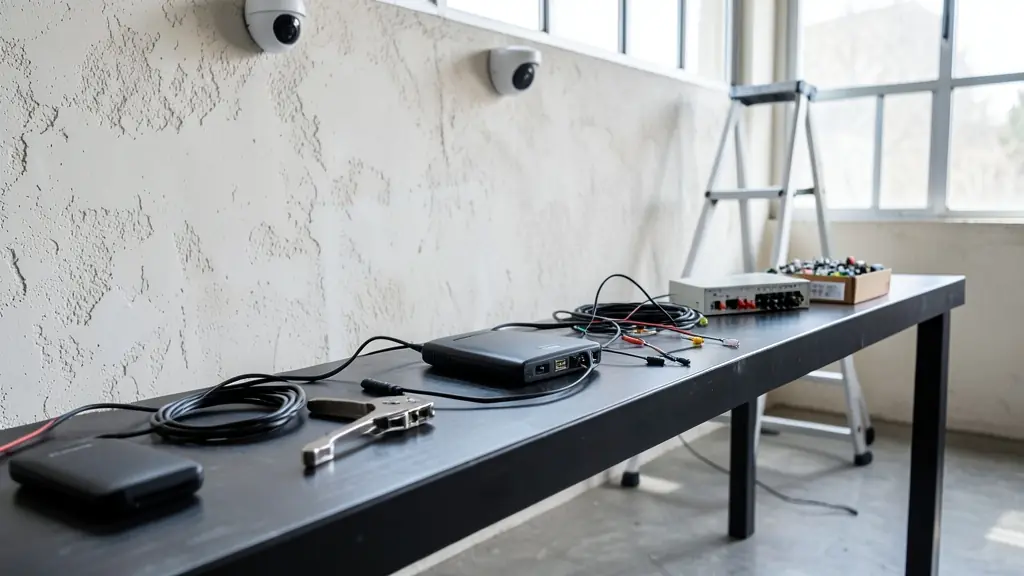
A security camera installation course is a practical way into a trade that keeps growing, from suburbs and complexes to farms and building sites. The good ones put a crimping tool in your hand on the first day. The weak ones are a slideshow and a certificate. This page covers what you should learn, how short and longer courses compare, the registration you need to work for pay, and what to buy before your first job.
What a solid course covers
- Cabling: Cat6 and coax, crimping and testing, running cable through roofs and conduit, sealing holes.
- Power: 12 V supplies, PoE switches and budgets, UPS sizing for load shedding.
- Recorders: NVRs and DVRs, adding cameras, hard drives, recording schedules.
- Networking: IP addresses, ports, the router, a separate camera network, passwords and firmware.
- Setup and handover: the app on the client's phone, alerts, lens choice for the distance.
- Safety: ladders, working at height, and knowing where mains work belongs to an electrician.
Short courses versus longer programmes
A one to three day short course gives you the basics of a small IP camera system and is useful for someone fitting their own home or adding cameras to an electrical or alarm business. Longer programmes add more practical hours, analogue and IP systems side by side, fault finding and design for bigger sites. Ask how many hours are hands on, how many learners share one bench of equipment, and whether you install a full system before you finish. Courses are usually priced per learner.
PSIRA and working legally
To install security equipment for reward you should be registered with PSIRA, and many clients and complexes will ask for the number. Some training providers help with the registration process; ask what they include and what you must do yourself. Plug points and work in the DB board need a registered electrician, so learn to plan around that rather than doing it yourself.
Tools and your first jobs
Plan for a decent ladder, a hammer drill with masonry bits, a crimper and cable tester, a multimeter, a fish tape, a small monitor or a phone app for aiming cameras, and a supply of junction boxes. The quickest way to real skill is working alongside an established installer for a few months: you learn quoting, roof work and what goes wrong on site. Read security camera installation and security camera cables to see the standard clients expect.
What to put in your request
- Say how many learners and their experience
- Say whether you want weekday or weekend classes
- Ask how many hours are practical
- Ask whether PSIRA registration help is included
- Say your town and how far you can travel
Security Camera Courses: who asks for them and why
- Freestanding houses: a home owner learning enough to fit and maintain four cameras without a call out
- Flats, townhouses and complexes: an estate maintenance person trained to handle the gate cameras and recorder basics
- Shops, salons and restaurants: a shop owner learning to add a camera and export a clip when something goes missing
- Offices and practices: an IT person adding camera networks and NVR setup to their skills
- Warehouses, workshops and yards: a facilities technician trained to service the bay cameras and the PoE switches
- Farms and smallholdings: a farm handyman learning solar camera setup and long cable runs to outbuildings
- Schools, churches and clubs: a school caretaker shown how to check recordings and keep cameras clean and aimed
- Building and temporary sites: a site technician learning to move and re-aim temporary cameras as work progresses
Frequently asked questions
Do I need experience before a CCTV camera installation course?
Is CCTV security camera training offered online?
Can a business send staff on a course?
Who will contact me about a course?
Work it out first
- Camera storage calculatorCameras, resolution, codec, hours and days in: the hard drive in TB and the days it keeps out
- Camera bandwidth calculatorCameras, quality and how much you watch in: upload Mbps for remote viewing and GB a month for 4G out
- Lens field of view calculatorLens mm, sensor, resolution and distance in: picture width, pixels per metre and DORI level out